Skip to content
Christian Science Committee on Publication for Southern California

Letter to Editor on Manifestation

The following letter to the editor was published as a response to the article “Manifestation: Unveiling the Power of Positive Thinking” .

I recently came across your article on how students are garnering the support they need from different practices of manifestation. As a Christian Scientist, I especially took note of how Christian Science was included in this thoughtful conversation. If I may, I would like to offer some clarity on what Christian Science teaches on this subject, as it can be misunderstood at times.

Manifestation as discussed in the teachings of Christian Science has a significantly different meaning from how it is commonly understood in New Thought, New Age, and other similar traditions. Christian Scientists are not seeking to turn “one’s dreams into reality through the power of positive thinking and intention-setting,” as your article shares. Christian Science teaches how to help quiet human will and materiality while yielding more to the Divine. This is the basis of prayer in Christian Science that seeks to better understand God in order to more clearly see and experience spiritual reality—to more fully recognize the premise and basis of true manifestation, or spiritual expression, is of God, divine Mind, alone. Mary Baker Eddy, who founded the church, expresses it this way in her book, Science and Health with Key to the Scriptures, “All is infinite Mind and its infinite manifestation, for God is All-in-all” (p. 468).

Additionally, the comment that Christian Scientists view sadness and pain or even the physical experience as unreal or as something to be denied is often misunderstood, and I’d love to provide some fuller context on it. Christian Science does not teach its adherents to turn a blind eye to humanity’s needs and conditions, nor does it expect people to suppress, ignore or hide their experiences. Christian Science ushers in Christly compassion to meet the needs of the world. It teaches that all evil must be overcome through an awakening to the great truth of God’s ever-present love. Christian Science starts from the premise that God is Spirit and created all in His/Her likeness, meaning everything in reality is spiritual. Our experience may be dimmed or influenced by mortal, material thinking, but as we lift up our understanding in prayer to what God has revealed and correct the beliefs that deny the presence of God, good, we get clearer views of divine reality, which transforms our experience in practical ways. We believe that this healing activity, as Jesus taught and lived, is how we experience more of the kingdom of heaven on earth.

Thank you for your consideration, 

Anne Cooling, Christian Science Committee on Publication for Southern California

Does Prayer Make a Difference?

Does Prayer Make a Difference?

By Anne Cooling Does Prayer Make a Difference? There are varying reactions within the public about the common phrase, “thoughts and prayers.” If this well-intentioned offering is spouted as a platitude without true dedication, the empty words fall hard on suffering hearts. On the other hand, as evidenced in the genuine outpouring for the Buffalo Bills’ injured player and the communal healing response for Monterey Park, such prayerful expressions are deeply heartwarming. According to the latest Gallup poll, 75% of people engage in prayer in their lives. Why? What is it that prayer offers us? And how do we make it meaningful and impactful? As someone who engages in prayer quite often, I have witnessed how prayer solves problems and transforms characters, hearts, thoughts, and lives in very tangible ways. Prayer brings peace, healing, restoration, health, guidance, and freedom. And it can bring them not only to the person praying, but to those for whom we pray. So, how do we move our prayers from spouting platitudes to experiencing the great love of our Creator? Many of us have petitioned God for help in prayer and that humble yearning is often needful. And yet, there is something truly transformative when the heart of my prayers go beyond petitions or mere positive thinking. To learn more about prayer, I frequently turn to the Bible. The book of Psalms as well as the prayer that Jesus shared with his disciples which many refer to as the Lord’s Prayer are incredible examples that countless people have leaned on over the centuries. Rather than a formula, I see these prayers as providing a structure for my own prayers. They help focus my thoughts so I can better hear God’s Word that offers guidance, inspiration, and answers for today’s needs. Beginning by striving to recognize God’s all-power and everlasting grace in quiet prayer helps to silence the doubts and fears that would have me feel separate from God. As with the prophet Elijah (see I Kings 19), this recognition of the “still small voice” of omnipotence allows my whole heart to be in audience with God. In this sanctuary of Spirit, I am reassured that God’s goodness can actually be seen and felt in my life. As the Lord’s Prayer states, “Your kingdom come, your will be done, on earth as it is in heaven.” This tells me that the love of God isn’t in some far off place; it is present. It is “on earth” so to speak. And so I find that my prayers address specifically the needs of today and tomorrow and in a practical way strengthen my trust that prayer is more than nice ideas I say to reassure myself. There is real spiritual power behind it. In time of need while I was unwell overseas, I experienced the assurance and healing effect the Lord’s prayer offers. As I prayed, I sought to deepen my understanding of each line of this affirming prayer. Humbly and persistently engaging with the inspiration of this prayer, I was healed of intense symptoms of food poisoning and was able to meet my tour group on time that morning with complete freedom. Prayer for oneself and the world are both vital and needed. We cannot help ourselves or the world if one is drifting with the current of thought that is only steeped in the problem and letting fear, anger, frustration, rule our hearts. Humbly praying each day allows us to experience the grace of God’s presence that is so needed. This prayer changes us and affects our interactions with the world around us. It ripples out to public thought of which we all contribute with every thought and prayer. Mary Baker Eddy, the founder of the church I belong to, The First Church of Christ, Scientist, wrote in her pamphlet, No and Yes, “True prayer is not asking God for love; it is learning to love, and to include all mankind in one affection. Prayer is the utilization of the love wherewith He loves us.” (p. 39) Compassion and leaning on God will go a long way in helping us be what we already are in the eyes of God’s love and hear fresh ideas that inspire solutions and heal hearts.  
Christian Science is not what is commonly called Self-Help; it is Christianity

Christian Science is not what is commonly called Self-Help;…

Many may consider prayer to be merely a form of self-suggestion, but for Christian Scientists it is God that heals and transforms people’s lives in a way that limited human efforts, positive or otherwise, cannot.

“The basic question humanity asks in regard to all religious experience is: Is it truly of God, or is it just a human phenomenon—a product or projection of human belief, a type of self-help?

The first public question raised about Christian Science centered on just this point. In 1871, when a letter in the local newspaper assailed her teaching of Christian healing, deriding it as merely a form of “mesmerism” cloaked in religious language, Mary Baker Eddy vigorously defended the spiritual authenticity of Christian Science, rightly understood and practiced.

This Science “belongs to God,” she wrote, “and is the expression or revelation of love, wisdom, and truth. It reaches the understanding, first through inspiration, and secondly, by explanation.” Christianity and mesmerism “are separated” by a “barrier” and could not be united, she added in a letter to a student. 

As the three published items that follow illustrate, Christian Science Committees on Publication continue to challenge this basic misconception as she did.” 

View the Articles here

Article Published in Magazine shares life of Mary Baker Eddy

Article Published in Magazine shares life of Mary Baker…

Based on discussions with the the National Women’s History Alliance (NWHA) shared with a local Assistant Committee on Publication, The Committee on Publication for Southern Californias was invited to write an article on Mary Baker Eddy for their annual publication.

The article, Mary Baker Eddy, Breaking Barriers for Humanity, fit right in with the NWHA theme for the year: “Women Providing Healing, Promoting Hope.” Click here for a link to the online version of the magazine.

tunnel with woman jumping in the light at it's end

Love — The natural Christian Science response in caring

An article was published in the Daily Pilot about a woman with an upbringing in a Christian Science family.  The article attributed to Christian Science the father’s reaction to his wife’s death.

tunnel with woman jumping in the light at it's end

Response to death was atypical

Re: “Source of great county stories has one of her own,” (Feb. 4):  Many people respond to the loss of loved ones by sealing off their memories, as Jill Lloyd’s father evidently did.  I’d simply like to add this isn’t a Christian Scientist’s normal response to grief.

One’s first response, as a Christian Scientist once wrote, may be “to feel the very heavens should open and weep …” But that doesn’t close the story, as the article itself shows. God’s love and grace heal the heart in surprising ways. Those we’ve loved are cherished all the more for what they have given, not forgotten or their lives denied.

For Christian Scientists, the humanity expressed by Jesus is the model for living. Rather than glossing over death or the new life seen in his resurrection, it is the practical following of his teachings — loving others, humility, and gentleness opens the door for true healing here and now.

Anne Cooling

Christian Science Committee on Publication for Southern California

Aliso Viejo

jesus sitting on the hillside

Christian Science Not a Prosperity Gospel

An opinion article in The Washington Post was re-published in the January 7, 2017 edition of the Antelope Valley Press, containing the following headline and statement:

Trump’s aim to mainstream heresy deeply troubling

… The headwater for both streams is New Thought, formulated especially by Phineas Quimby, a late 19th-century mesmerist whose mind-cures attracted Mary Baker Eddy, founder of Christian Science. The basic idea of his “gnostic medicine” was that we’re sick only because we think bad thoughts. Illness and death are an illusion.

Published response from Don Ingwerson in January 29, 2018 paper:

Misreading teachings of Mary Baker Eddy

Michael Horton, in his commentary, “Trump’s aim to mainstream heresy deeply troubling,” Jan. 7,  raises important moral issues in his recent article on the theology known as the “prosperity gospel.”  

jesus sitting on the hillside
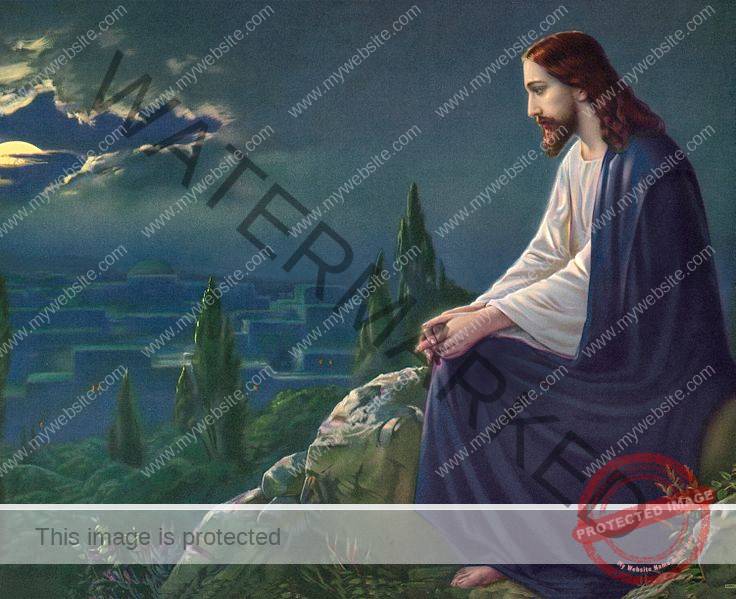
Jesus at Gethsemane

The article, however, misreads the teaching of Mary Baker Eddy – the founder of the Church of Christ, Scientist – in connecting it with this theology.

Actually, Eddy’s teaching is rooted in very different values. She didn’t teach that “God dispenses material wealth and health,” or that material gains or selfish pursuits in any sense outweigh the true priorities of Christianity: love for God, love for humanity, honesty and integrity in all things, redemption from sin, following the example of Jesus, as far as we understand it, inwardly as well as outwardly.

Christian Scientists – the common name for members of our church – haven’t always lived up to these values, but they’re at the heart of who we are as a church and how, at least at our best, we are trying to live.

The same applies to our understanding of prayer. Like many Christians, we have a deep conviction that turning to God’s unchanging, impartial love in prayer can meet human needs in a practical sense, including healing of the body. 

But Jesus set the true priorities for prayer in his Sermon on the Mount: “Seek ye first the kingdom of God and his righteousness.” This is a far cry from praying for riches, from positive thinking, and from the “mind cures” through suggestion attributed to the nineteenth century figure P.P. Quimby. Eddy’s encounter with Quimby largely helped her see how different the use of human mind power is from genuine Christian healing. 

“Are we benefited by praying?” she wrote. “Yes, the desire which goes forth hungering and thirsting after righteousness is blessed of our Father, and it does not return void.”

Christian Science Healing

Christian Science Healing and its Effectiveness

The linked article excerpted below entitled, “The fact of healing in Christian Scientists’ experience,” opens with a Bible story of one of Jesus’ healings. First the healing was denied, then when denial proved impossible, an attempt was made to discredit Jesus.  When the person who was healed defended Jesus, he was kicked out of the temple. The healings experienced by Christian Scientists often encounter similar denial and disbelief. This generally isn’t personal in nature. Today, as in Jesus’ time, Christian healing challenges the limits of finite mortal thinking.

The article includes two published responses on the value of Christian Science healing. The first is a commentary in a newspaper briefly explaining the effectiveness of Christian Science healing. The second is a comment affirming the relevance and meaning of lived Christianity experienced through healing that was posted in response to a National Geographic article that suggested Christian Science healing is akin to the placebo effect. 

“The blanket denial of Christian healing today has its source in the materialism that colors so much of contemporary thought, especially in the academic community. The two commentaries reprinted below respond to this denial. They don’t dismiss the questions raised by many who are skeptical of Christian Scientists’ healing practice. They acknowledge that serious questions deserve serious and thoughtful answers. They were written in the conviction that patience, understanding, truth—and Christian Scientists’ actual healing works, more than words—will ultimately find response in the hearts of honest thinkers.”
Link to article here.


Children and Christian Science

Children and a Christian Science Health Perspective

Care for children is society’s first concern. It’s the primary responsibility of parents. It’s the shared responsibility of everyone. The linked article started below entitled, “Caring for the Children: Wisdom, Humanity and the Heart of Christian Healing”, looks at a Christian Scientists’ perspective on this important subject.

The two responses in the article both concern issues of parental responsibility and protection of children in today’s complex and sometimes troubled society. The first is a comment on a radio interview with a physician noted for his emphasis on the need for better understanding at the interface of medicine and religion. The interview was prompted by a case in the courts involving so-called faith-healing beliefs and practices, which are often mistakenly identified with Christian Scientists’ healing practice.The second response is a letter to a network television commentator regarding a case that did not involve religion specifically at all, though it did present deep legal, ethical, and spiritual issues for everyone connected with it.

“As a Christian Scientist, I’m always grateful for the understanding and respect shown by physicians toward our religious practice, so I particularly appreciate the thoughtful understanding Dr. Ray Barfield seeks to encourage in his medical students toward the varying religious views of those they encounter. I agree with him that the respect needs to be mutual and the listening two-way.

Christian Scientists’ practice and perspective differ considerably from faith healing as that term is usually understood. We don’t believe in eternal damnation, so can relate deeply to Dr. Barfield’s questioning of traditional religious rationalizations for suffering. Actually, our church teaches the unvarying love of God for all humanity—a divine grace encompassing everyone, regardless of faith or background. We don’t see disease or misfortune as somehow a “divine punishment” for personal sins and failings.

However different our perspective is from society’s as a whole, Christian Science emphasizes the humanity at the heart of all genuine healing. We value the kindness and humanity of medical professionals in their efforts to help those who seek their care. Our denomination has always counseled respect for public health authorities and conscientious obedience to the laws of the land, including those requiring vaccination.”

As for the laws relating to care of children, view the Article here.

two hands holding

Christian Scientists Responding to Humanity

In 2016, a newspaper reporter asked a Christian Scientist what his church was doing to respond to the refugee crisis happening at the time. The article excerpted and linked below was written in response to that question. It is still relevant in giving insight into how Christian Scientists care for the world’s most pressing humanitarian needs, such as those in Afghanistan and Haiti, today.

EXCERPT: 

The current refugee crisis has stirred concern and controversy all over the world.  “A quarter billion people,” The Christian Science Monitor noted last year, “have either fled disasters or migrated to escape poverty.” How should our nation respond? What can we do as individuals to help—as churches, temples, cities and towns, businesses, civic organizations? Can anything be done, practically and realistically, to meet this enormous need?

These questions have prompted many people of faith—and many people of conscience who don’t embrace a religious faith—to ponder their responsibilities to fellow human beings in need.

As a Christian Scientist, I’ve wrestled with these concerns as both the humanitarian crisis and the political controversies have deepened. My church doesn’t tell its members what to think or do on these matters. We make our own decisions as individuals, based on our highest sense of what’s right, and what prayer and spiritual leading inspire us to do.

Many Christian Scientists have participated in aid efforts over the years, both as volunteers and professionals. One church friend here in Washington, for example, worked in the Middle East for some years for a nonprofit organization that supported refugees and longer- term economic development.

The Christian Science Monitor reports on the troubles of the world and often takes strong positions in its editorials. The aim isn’t to express a “church view” but to draw attention, in a spirit of healing, to what needs attention and constructive practical response. Our churches as a denomination have participated in relief efforts in the past and continue to contribute where it can make a difference. But the human needs are bottomless and often far beyond our ability to meet them with even the most dedicated human efforts.

This isn’t cause for inaction, but it forces us to ask, What more can we do? The most significant contribution a church can make, I’ve come to feel, relates ultimately to the spiritual light that a church can bring to humanity. This light isn’t just a theology. It changes people’s hearts and understanding of themselves. It shines on each of us our true worth and spiritual nature as, in the Bible’s words, the “image and likeness” of God.

This vision is “very powerful,” as my church friend who worked in the Middle East stated. “When we get this vision of man as the reflection of God, as the way God expresses His own nature … then we see the preciousness of each individual man or woman or child.”

This spiritual understanding of man is also very practical. Another church colleague, now living in the Democratic Republic of Congo, became a refugee himself during the genocide in Rwanda in the 1990s…

Click here to read the full article.

bunny in field

Christian Science does not ignore evil

Jesus’ utter certainty of spiritual reality and God’s boundless, present goodness did not make him less feeling or compassionate in responding to sorrows of the human condition.  He did not ignore the evil put in his path.  On the contrary, his life and example defined a deeper and much more radically selfless kind of love:  a love that heals, and that many have recognized as reflecting the nature of God. Those who follow Christian Science teachings strive to continue Christ Jesus’ healing purpose in his response to humanity and his eradicating evil.

“One of the most pervasive misconceptions about Christian Science is the assumption that, because it insists on God’s boundless, present goodness and love–and the illusory nature of all that’s contrary to this divine reality–its teachings represents little more than a form of sunny, superficial optimism in its view of human condition.  But this is no more true of the actual perspective of Christian Science than it is of New Testament Christianity, as the two letters published in the link below bring out.  Both of these letters–one written in response to a newspaper commentary and the other in response to a Christian blog post–reflect the profound spiritual realism expressed by the Founder of the Church of Christ, Scientist, Mary Baker Eddy.”

To access the articles click here.

  • Log In
  • Register
  • Member Posts
  • Public Posts
  • Home
  • Home
  • About
  • Resource Materials
    • FAQs – About Christian Science
    • Christian Science Healing
      • A Study of Healing Testimonies
    • What makes Christian Science Christian?
      • Is there no sacrificial atonement?
      • Do Christian Scientists take Communion?
      • Sin and Grace
      • The Resurrection of Jesus
      • Baptism and Christian Experience
  • Public Posts
  • Register
  • Site Map
  • Log In
Theme by Colorlib Powered by WordPress
MENUMENU
  • Copyright © 2019 ComPub Southern California
  • Photo Credits
  • Privacy Policy
  • Terms of Service
  • Contact Us